To get lost
The sacred disorientation of the body

In March, Orbita Spellbound inhabited three places.


Three homes allowed a single body, that permeable and perceptive body of Orbita, to tell a story. This story is marked by a word: spaesarsi. Literally, to lose one's country means to lose one's home, as the peasants did when they moved from the countryside to the cities. To lose a country, but thanks to movement find another; to change landscape, language, and meet a new community; to cross multiple regions, always remaining in the same body.


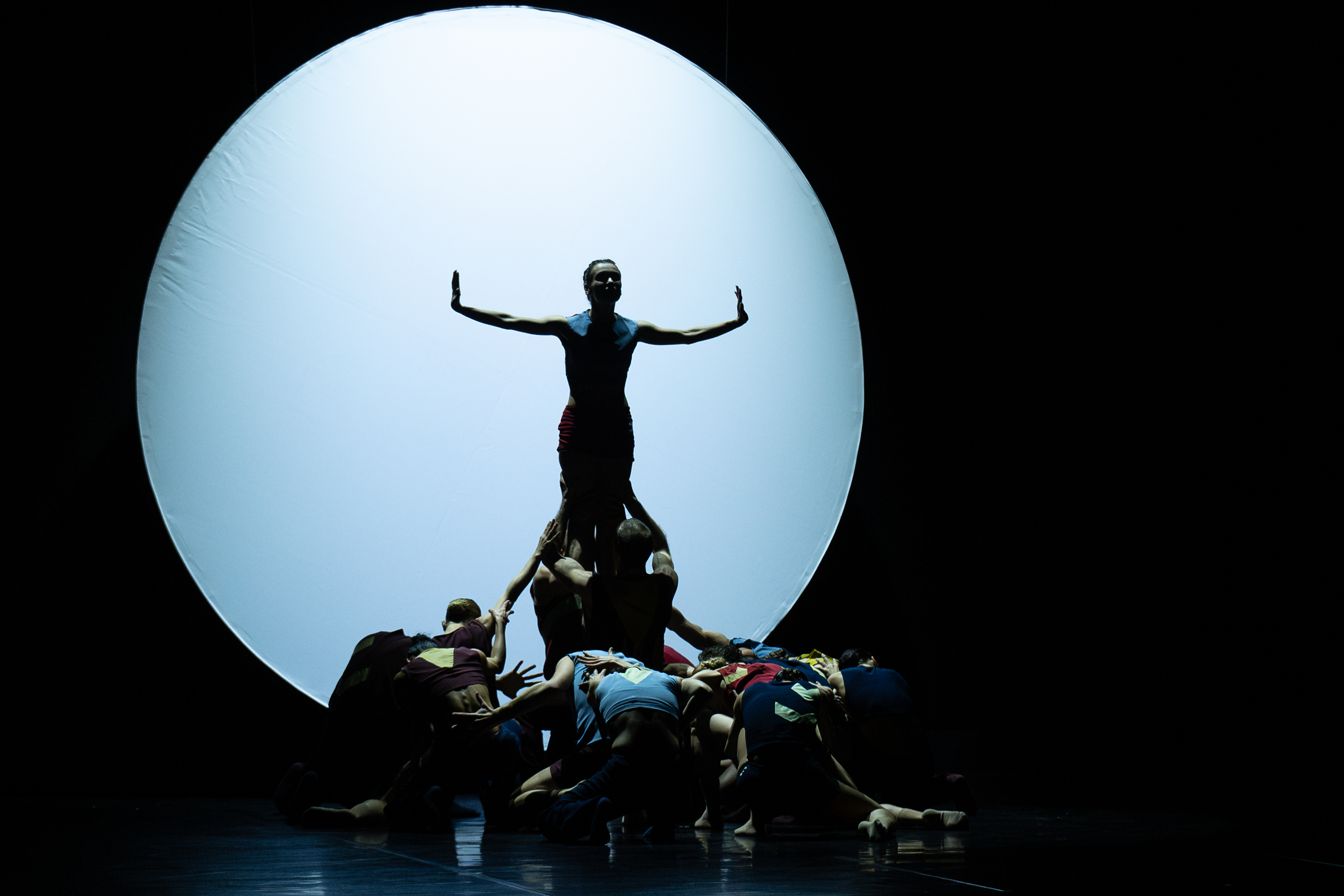
It is near the remains of an ancient aqueduct that the first country arises: it is the Teatro Ambra Jovinelli. George Gershwin's Rhapsody in Blue is a “fantastic toy,” and the choreography by Iratxe Ansa and Igor Bacovich is an attempt to decipher it. The full moon absolutes the gesture and makes it clear, and in its light the bodies are able to meet, recognize each other, and infect each other, only to separate with equal ease. Shortly after, the highly personal clothes of the rhapsody dissolve in the face of the standardized work uniforms of Holy Shift, a creation by Mauro Astolfi. Here it is clear that something is imploding, and that to survive it is necessary to learn a new sense of orientation, capable of leading “not toward power, but toward presence.” In a dystopian society, only on the surface is the movement still and secure. It actually comes from a deep wound, but it is in inhabiting it, building on those very ruins, that lies the hope of a new possibility.

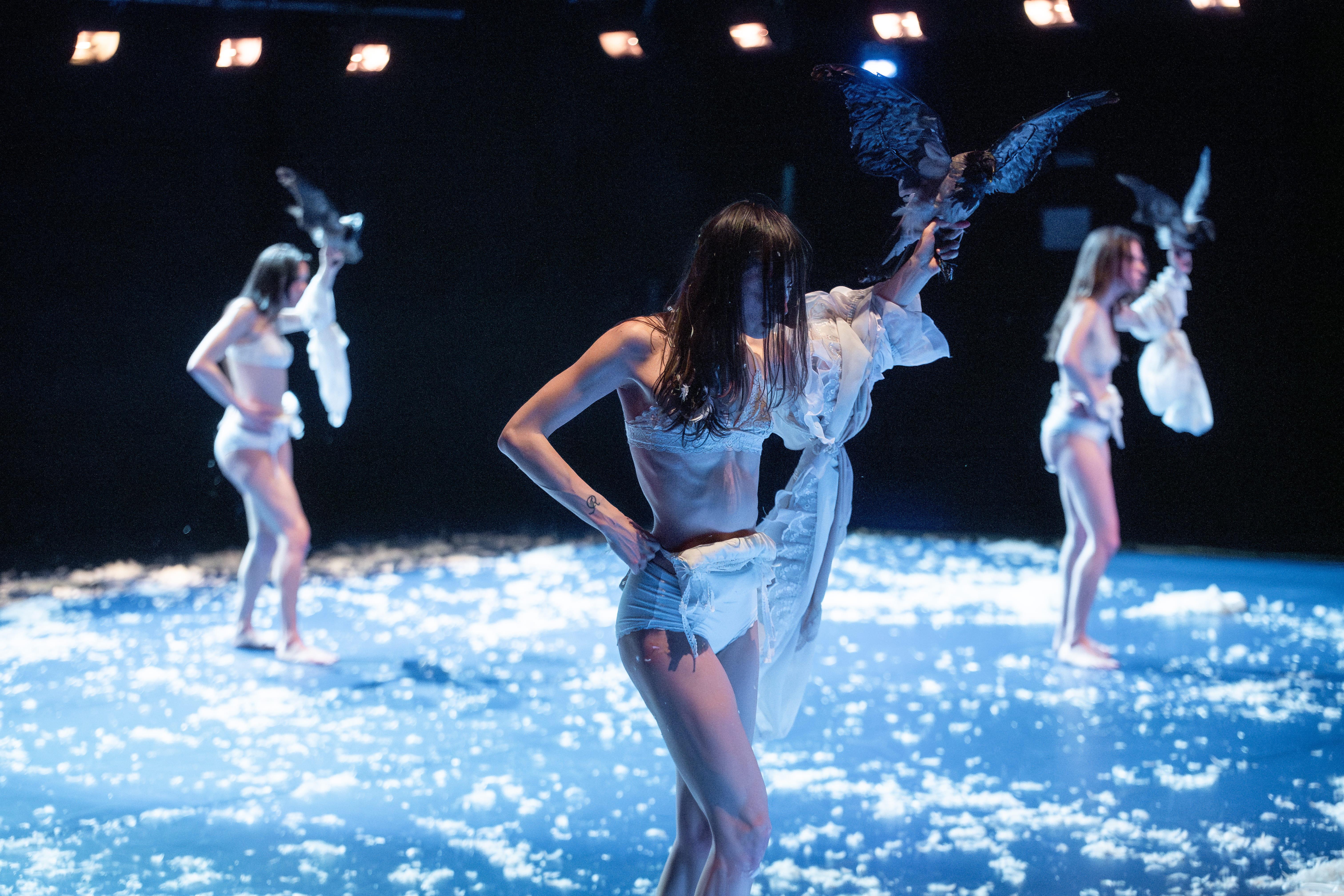
In the middle of a valley stands Spazio Rossellini, a village where dark rituals are performed. In Cani Lunari, a voice guides us through a liminal space as electronic music blends with Ovidian verse, while the body, in which the soul rests only for a while, becomes a threshold to be crossed. By staging a metatheatrical reflection on the stage as an altered state of consciousness, Francesco Marilungo recreates a powerful magical practice, and the woman’s body, threatened and subjugated, escapes male control and the dominance of positive science, revealing hidden truths buried beneath the only world we believe possible.


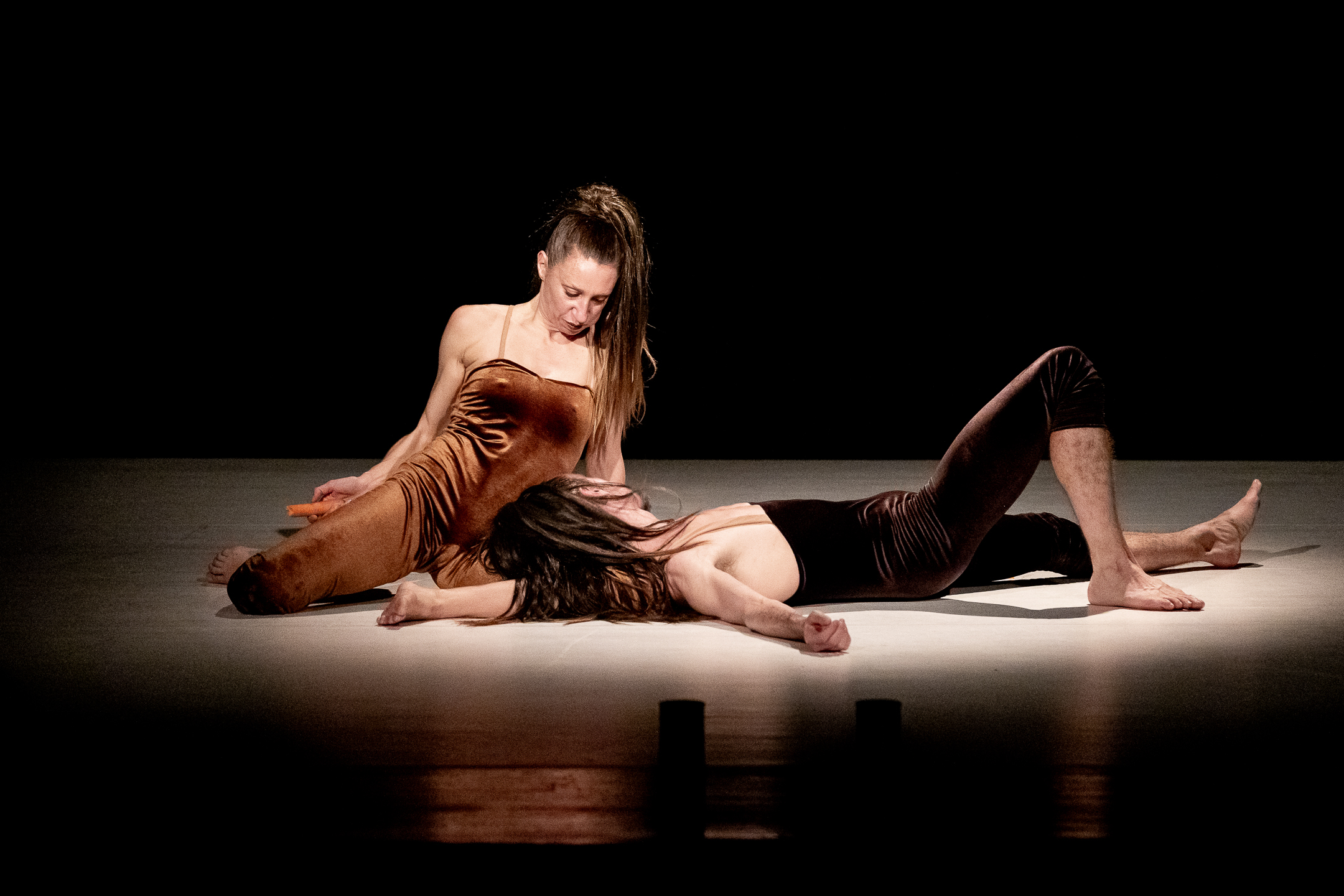
Flat, here is the last village. At the Teatro Biblioteca Quarticciolo, choreographer Andrea Costanzo Martini stages two different projects, yet both tell the same story of contrast: the clash between performance and reality. In Pas de Cheval, movement radiates creative and vital tension, but the dissonant voice reveals the cracks in an underpaid and stifling artistic system; in What happened in Torino , the effect of the other’s gaze on the body is central, bringing to light the struggle between the desire to be seen and the fear of losing oneself in the face of judgment.


In March, Orbita Spellbound allowed us to cross through three worlds. There are simultaneous, multiple imaginaries to emerge from and enter, and five boundless dances that perhaps continue still, uninterrupted and endless, in that dance which has eternally been the same and always will be.


Sofia Carlotto