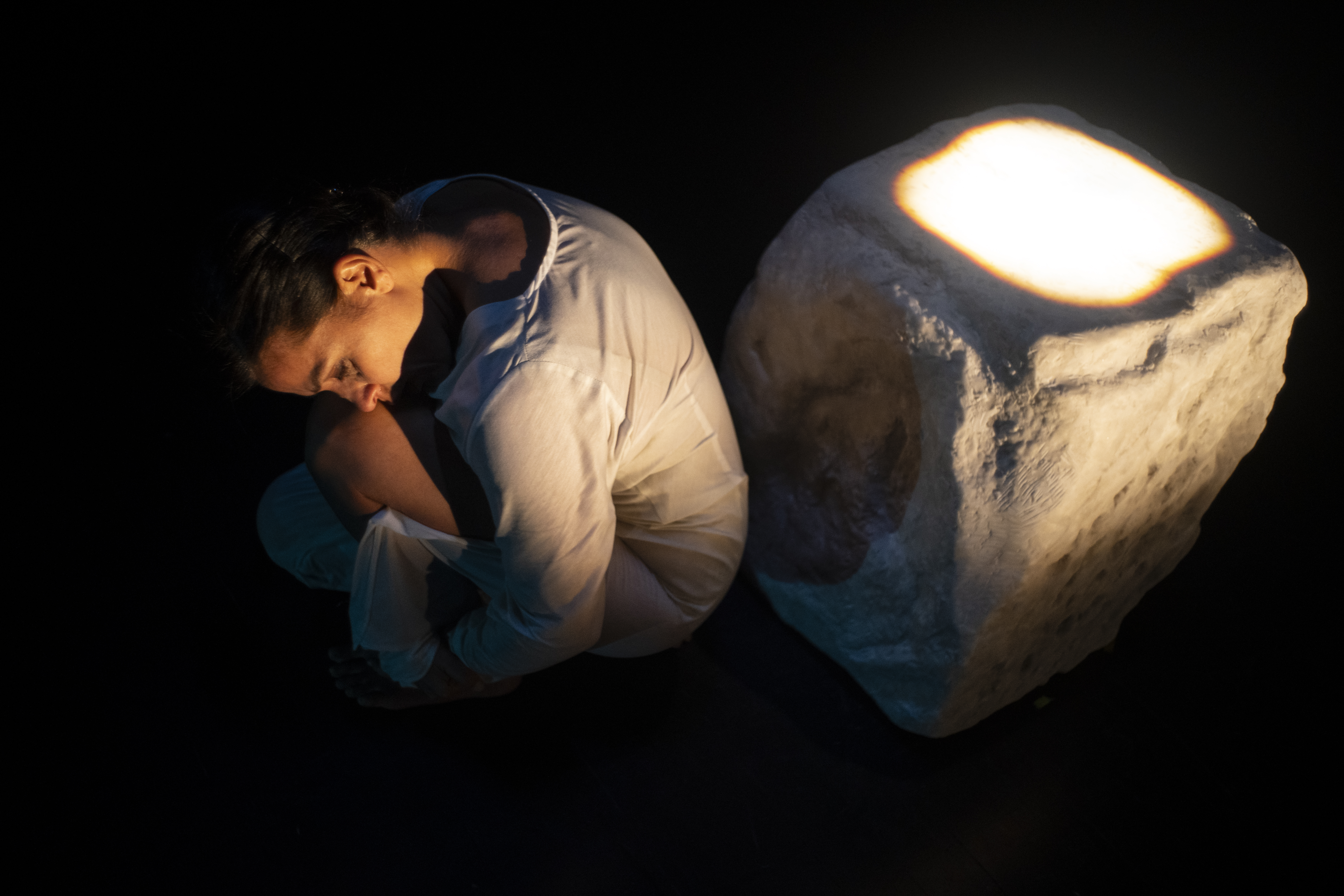
A woman on stage, a block of stone coming to life, Carlotta Viscovo gives voice to Camille Claudel, sculptor and tragic woman of the 19th century. In an ecstatic state, transcending herself, Carlotta Viscovo becomes the embodiment of a testimony, the cry for help of a woman, Camille Claudel, who like Carlotta Viscovo, fought.
Carlotta fought for the rights of entertainment workers as a trade unionist, Camille claims the right, of the individual, to do their work and to have their merits recognized. Carlotta Viscovo's project is a fine demonstration that the principle of art for art's sake is now obsolete and has no place in this world, where many more steps must be taken for the recognition of the artist and their rights as a worker.
Written by Angela Demattè and under the guidance of the dramaturg Alice Sinigaglia, the sculpture comes to life and speaks of itself, of the genesis and the never anachronistic nature, of the discomfort of protest, of making art. In the show, the breath and the image of the body have a strong significance, the choreographic study of the show boasts the direction of Alessandra Cristiani. Claudel's sculptures are snapshots of emotions, so Carlotta Viscovo gives herself to us, fragile, suffering, energetic and listening. The identities of the two women overlap. By biographical analogy, two women in the turmoil of feelings of anger, frustration, rage and paranoia. Making and being, sculptor and actress. For both figures, their craft is a reason to fight and does not end in the exercise of their work, a splinter wounds and inexorably moves those who fight for their own or collective freedom.
The matter comes to life in the body of the actress, who, not without autobiographical references, schizophrenically puts on stage the emotionality of souls in struggle; The breath and the image of the body have a strong significance, the body-struggle relationship. The bodies are marked, the struggle leaves a trace of its existence and becoming on the bodies. A full-round gaze, as around the statues, testifies what it is to live by art today, but also yesterday. Not only, to live according to values, but to fight for what is right.
Censored and criticized, Claudel's words were long unknown to most, but they always reverberated in the signs of her sculpture; in the theater they become sound; an impetuous sound of complaint, a desire for recognition. Is fighting for the right to artistic freedom not in itself an artistic effort? Carlotta Viscovo reveals herself in a narrative of testimony and redemption. For the first time on stage, the struggle outside the stage, for the stage. The ecstasy of the struggle leads the spectator to a state of immersion of the mind in the torments of Camille Claudel and Carlotta Viscovo, in the lives of people in battle and in resistance. Before the eyes, the continuous contamination of the testimonies of women, suffering, frustrated and yet never far from the goal, in an alternation of lucidity, torment and suffocated ambitions.
This project gives us an overlapping and multicolored texture of many materials and colors; it speaks of politics, of love, of art, of need and frustration. The struggle for the right and freedom to express and seek one's art, between the interest of the individual and the movement for the community, brings us closer and stops a declaration in time.
Benedetta Melone