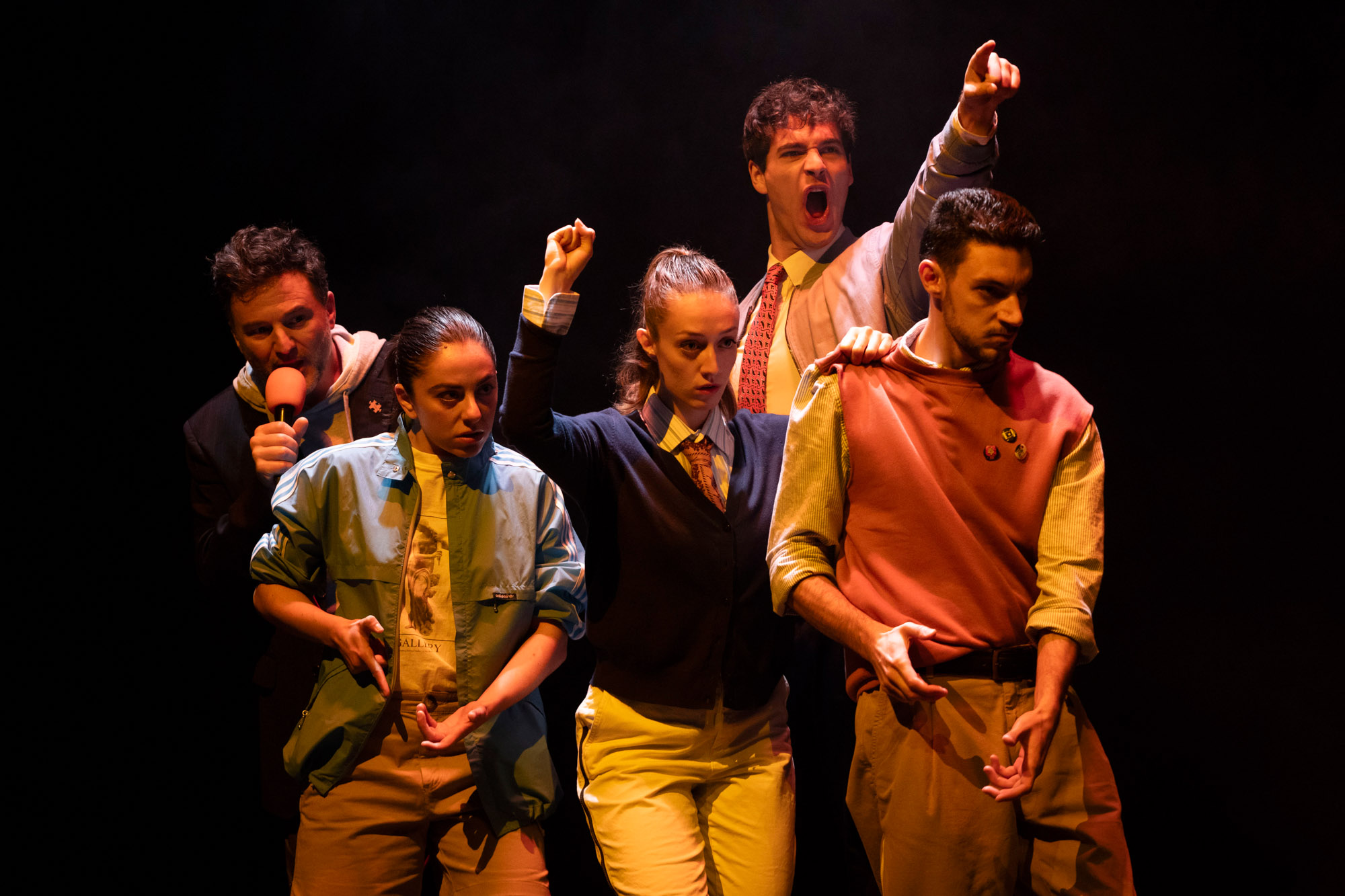
It is here, perhaps, that the play suggests the idea of reading as an act capable of creating the common identity of a community, through the fire of words. The value of the act of reading, capable of shaping consciences and realities, a gesture that today is increasingly underestimated, emerges forcefully in the fundamental scenes of the story, such as when Guy confesses to his wife that he has hidden books in their home. It is here that the Underground symbolically call on the audience to become the voice of that act, renouncing spoken words and allowing the story to continue being read on the two screens. And just as when we read, the two screens are filled with questions and doubts. A world without books, a world in which the figure of the intellectual is looked upon with contempt, could easily collapse into a dictatorship without criticism or resistance, in which the meaning of words is definitively altered. On the other hand, the other page seems to say, it could also be that we would survive by continuing to tell ourselves different stories, reinventing what we have read or what has been told to us. Memory is fragile, alterable, and renouncing the book could condemn us, more than to a hell, to a perennial present without past or future, erasing both the past and the future.
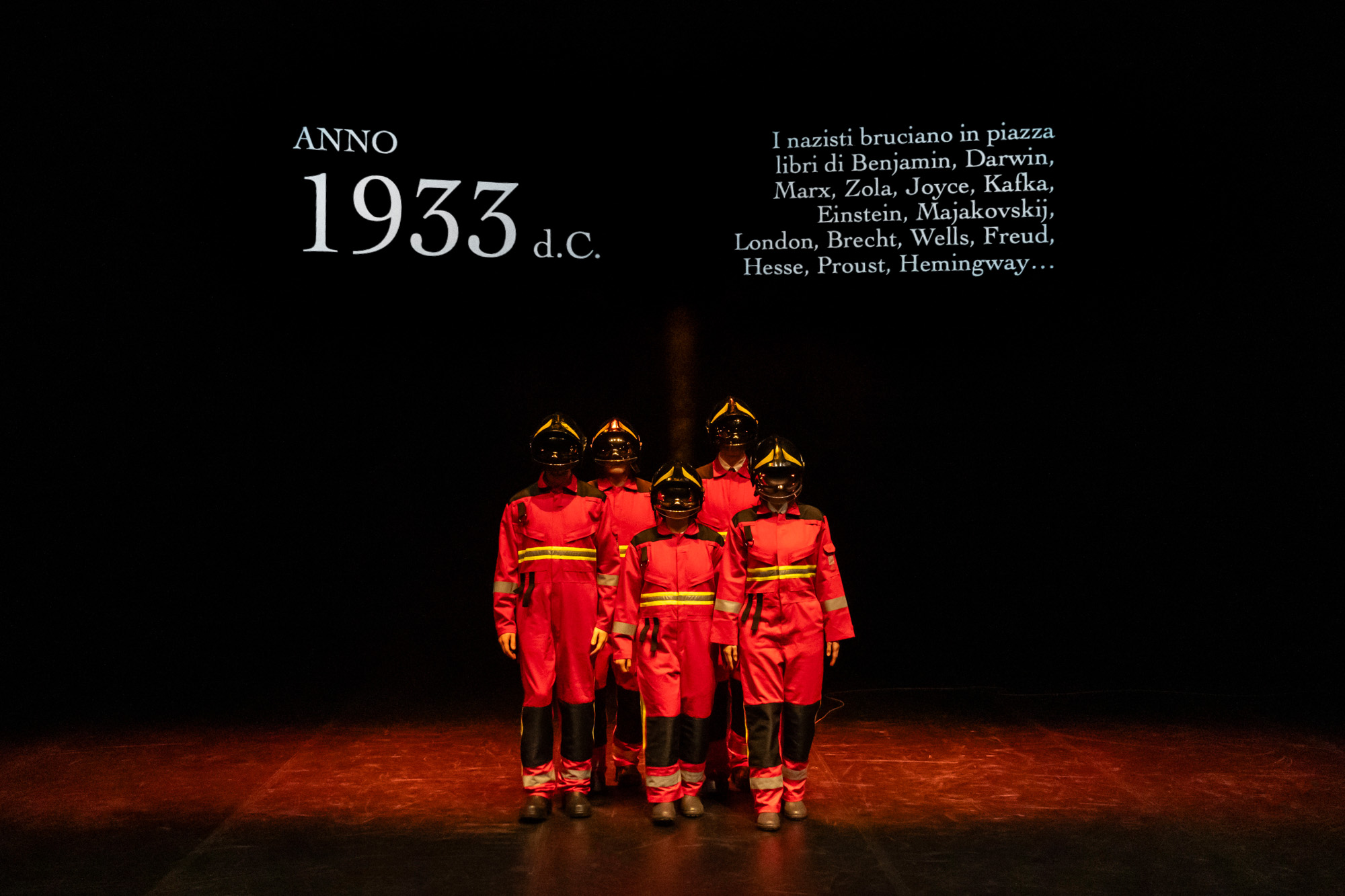
It would take barely a hundred years to ban books, to profile the people who use them, to slowly condemn their use, in a trajectory that cannot make us think of how much is already happening today, with the growing difficulty we experience in concentrating on the pages of a book. And it would all happen without mass clashes, without revolutions, with the tacit consent of a society adrift, which perhaps already today struggles to say which office of the Italian State has the authority to declare a state of war. A hundred years would be enough, without too much fanfare, to forget Melville, Proust, Woolf, to forget that there was a time when firefighters were called to put out fires, not to pour kerosene on words that were too dangerous.
A possible future that the actors stage with a presumed audience in 2051, with two nuclear conflicts behind them: printed paper has become a memory and with it the critical impulses of a society now anesthetized by the performances of white clowns have fallen dormant. Yet, the fire, the fire of the banned words, was the cure.
Federico Manganella and Luca Zammito